
03Material · Polflam glass
Fire-resistant glass
Fire-resistant glass is made from two panes of toughened safety glass with a clear hydrogel interlayer between them; for the duration of its class it stops flames passing through and protects the escape side from heat. We use Polflam glass in our doors and partitions: 20 mm for EI30, 35 or 40 mm for EI120. It transmits 85–87% of light; its class is matched to the certificate of the door or partition it is fitted in.
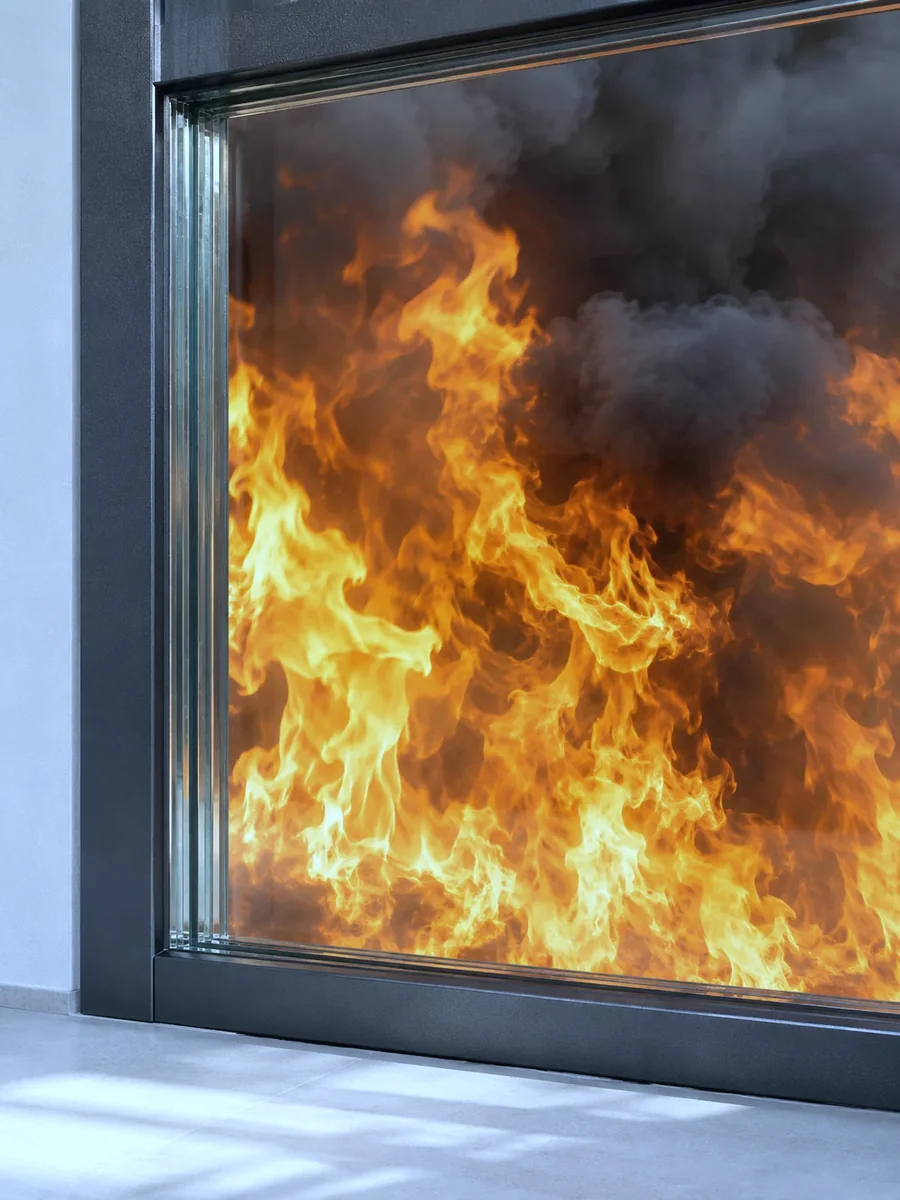 Laminated edgeInterlayer between the panes
Fire sideThe glass stays intact
- Glass
- Polflam EI
- Class
- EI30 – EI120
- Thickness
- 20–40 mm
- Weight
- 37–61 kg/m²
- Light transmission
- %85–87
01 Type of protection
What do E, EW and EI mean?
The letter says what is stopped, the number beside it for how many minutes. Choose a class.
E · integrity. Provides integrity against the passage of flames and hot gases.
EW · integrity and radiation. In addition to integrity, it limits heat radiation. It is not a thermal insulation class.
EI · integrity and insulation. In addition to integrity, it limits the temperature rise on the side not facing the fire. The Polflam glass in our doors and partitions is in this class.
Example: EI60 provides integrity and insulation for 60 minutes. Smoke tightness is separate; the certificate shows the letter S.
- 1Flames and hot gasDo not pass
- 2Heat radiationLimited
- 3Temperature rise on the escape sideLimited
02 Layers
What layers is fire glass made of?
Three views appear in turn; the line on the tab shows how long until the next one. The view you tap stays in place, and the numbers explain each layer.
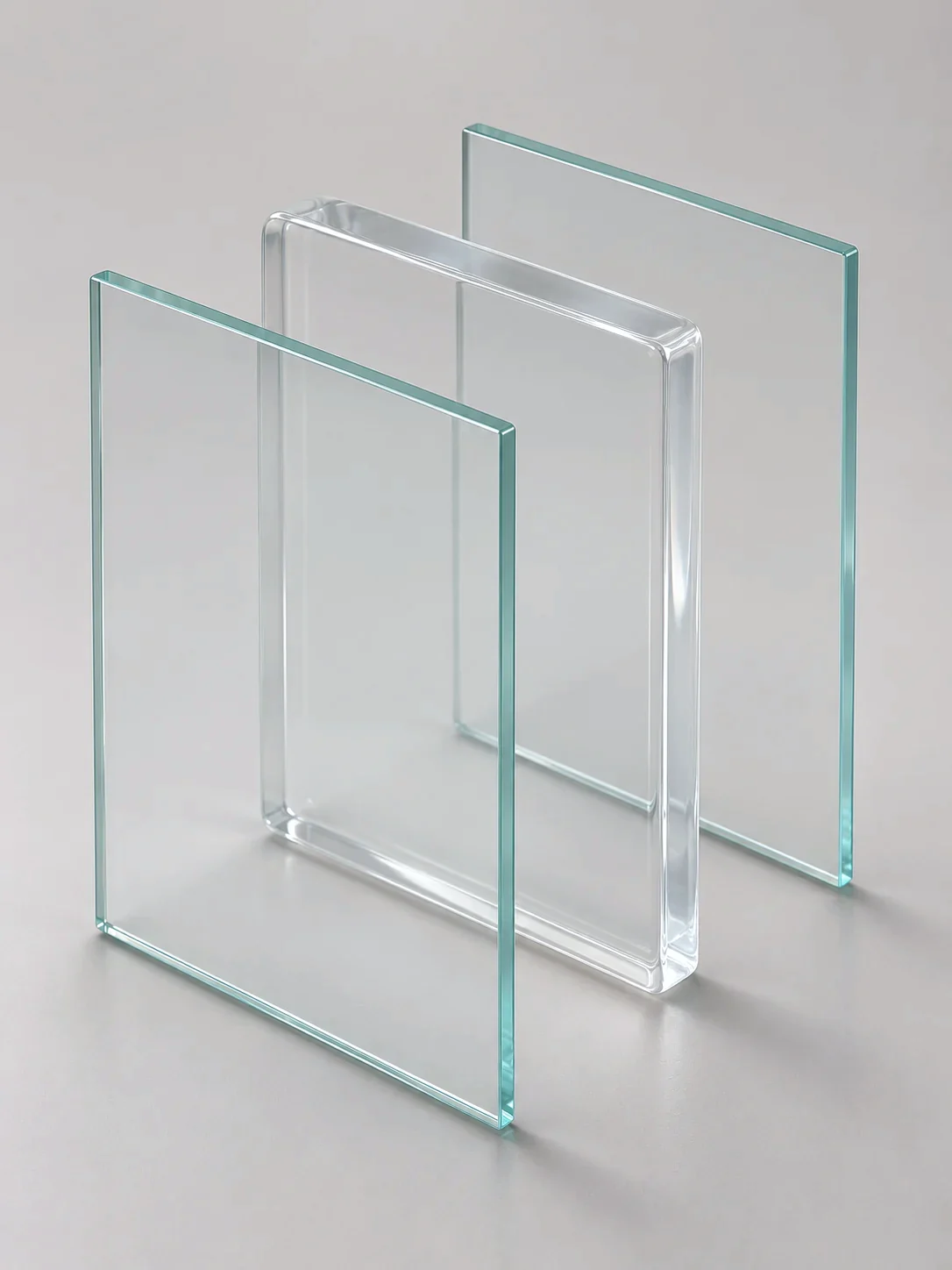
1 / 3 · LayersThe image shows the layers separately. In the glass, the space between two toughened panes is filled with clear hydrogel; all three form a single glass unit.
- Toughened safety glassOuter layer. Safety glass hardened by heat treatment.
- Clear hydrogel interlayerFills the space between the two panes. The thickness of this layer determines the fire class of the glass.
- Toughened safety glassSecond outer layer; identical to the first pane, so the glass is symmetrical on both faces.
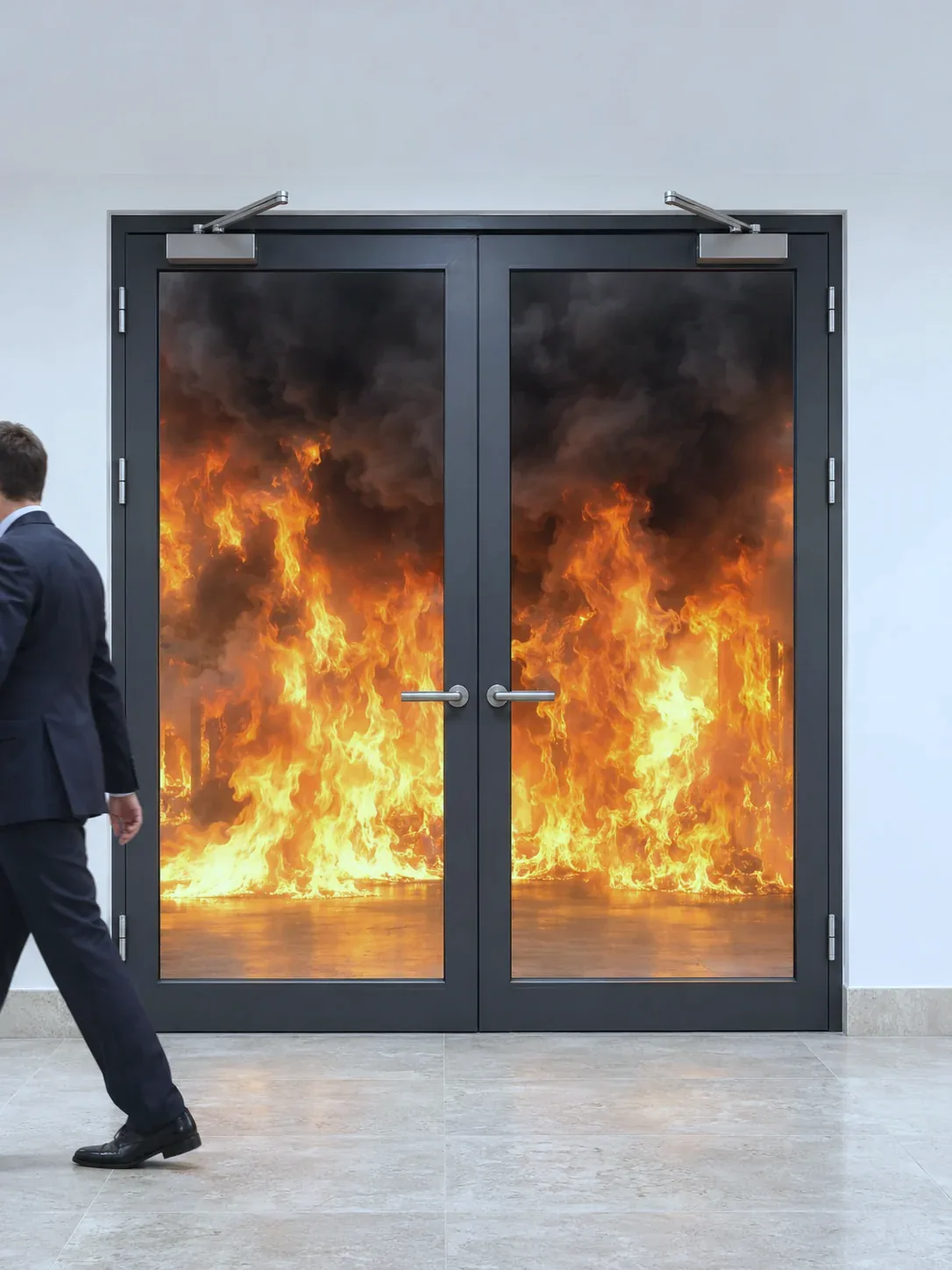
2 / 3 · During a fireOne side of the glass is in flames, the other side calm: fire glass maintains this separation for the duration of its class.
- Fire-resistant glassPolflam EI glass; because the interlayer is clear, it transmits 85–87% of light.
- Leaf profileThe glass sits inside the aluminium leaf profile; its edge is not visible from outside.
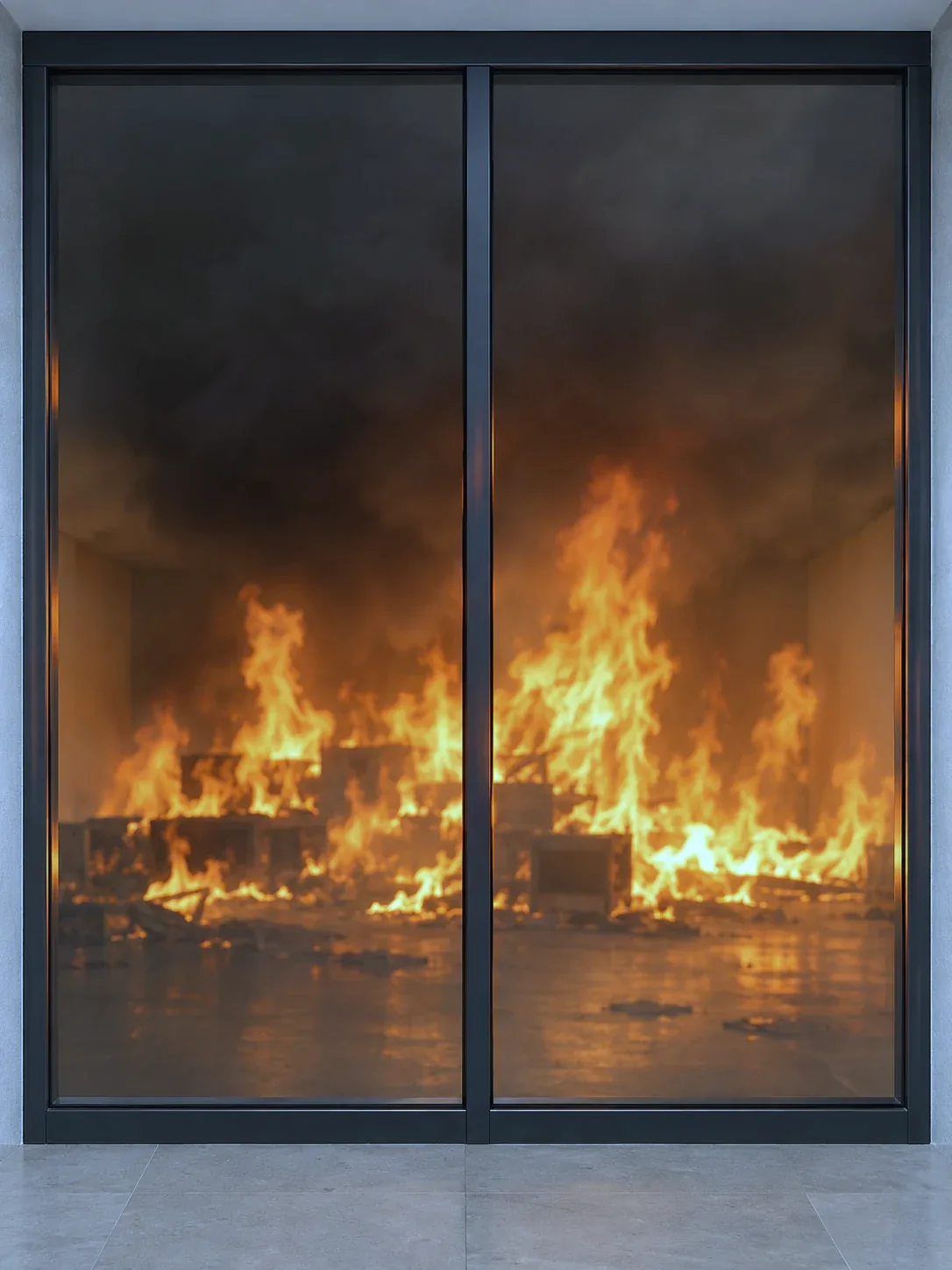
3 / 3 · In the frameThe glass does not work alone but together with the profile and gasket; its edge stays inside the profile.
- Fire glassThickness 20–40 mm depending on class; 37–61 kg per square metre.
- Aluminium profileThe Aliplast profile that carries the glass. The class of the glass matches the scope of the report in which it was tested with the profile.
- GasketPresses on both faces of the glass to hold it in the profile.
03 Thickness and light
How thick is each class of glass, and how much light does it transmit?
As the duration increases the glass gets thicker and heavier; light transmission stays almost the same.
- EI3020 mm
- Light
- %87
- Weight
- 37 kg/m²
- Sound (Rw)
- 43 dB
- EI6025 mm
- Light
- %87
- Weight
- 43 kg/m²
- Sound (Rw)
- 44 dB
- EI9032 mm
- Light
- %85
- Weight
- 51 kg/m²
- Sound (Rw)
- 44 dB
- EI12035 mm
- Light
- %87
- Weight
- 55 kg/m²
- Sound (Rw)
- 47 dB
- EI12040 mm
- Light
- %86
- Weight
- 61 kg/m²
- Sound (Rw)
- 48 dB
Frameless partition: in a partition where the panes meet edge to edge, separate BR glass is used, 30–50 mm. Frameless glass partition
 Abay Yapı Sistemleri
Trusted for 30 years.
We make our doors and partitions with Polflam fire glass and Aliplast profiles in our Istanbul workshop, to the dimensions of each project.
- 154
- corporate references
- Aliplast
- authorised manufacturer and distributor in Turkey
- Polflam
- partner for fire-resistant glass
- Istanbul
- head office and production, Istanbul






- 01Project and useBuilding type, required rating, door location
- 02Size and openingOverall size, clear width, opening direction
- 03System and hardwareProfile, glass, lock, closer
- 04Quote and productionScope agreed, delivered with the document set
Projects
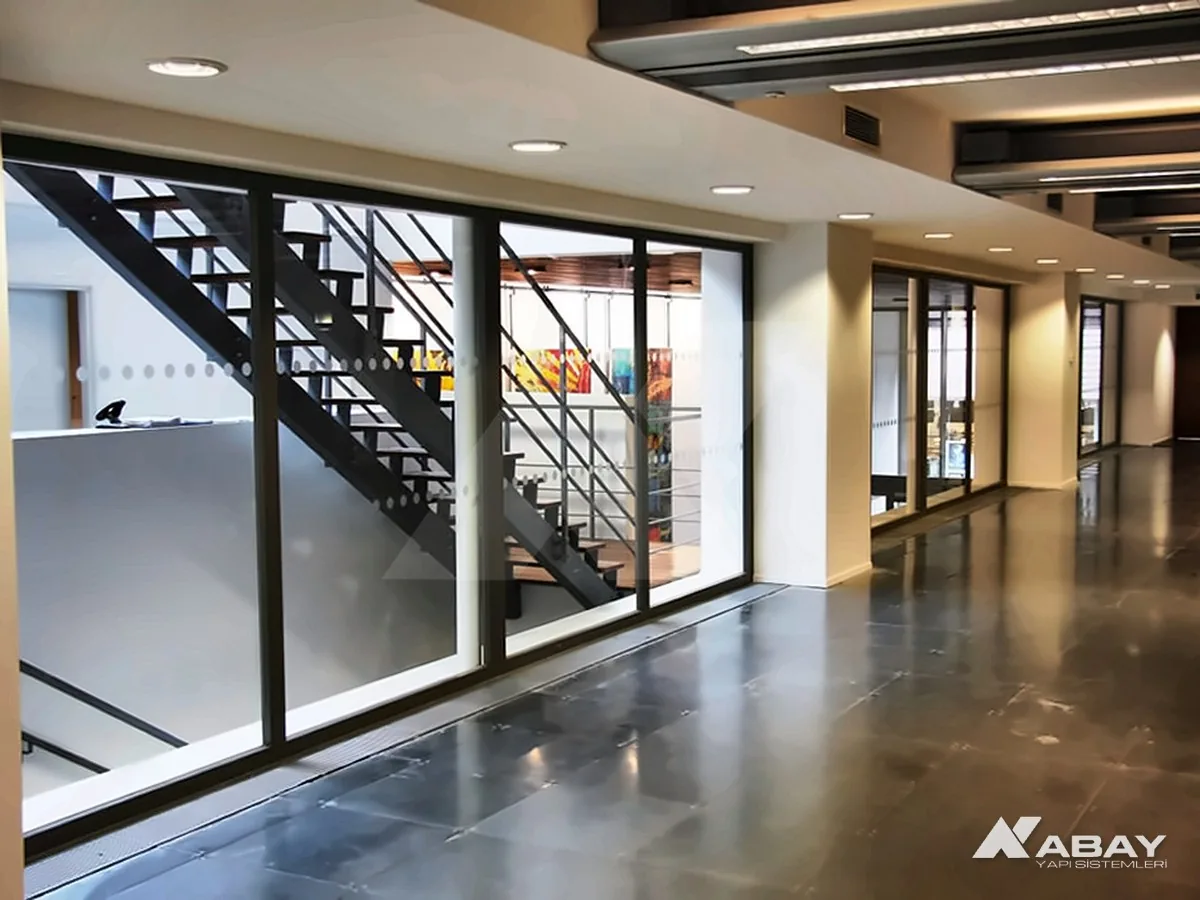
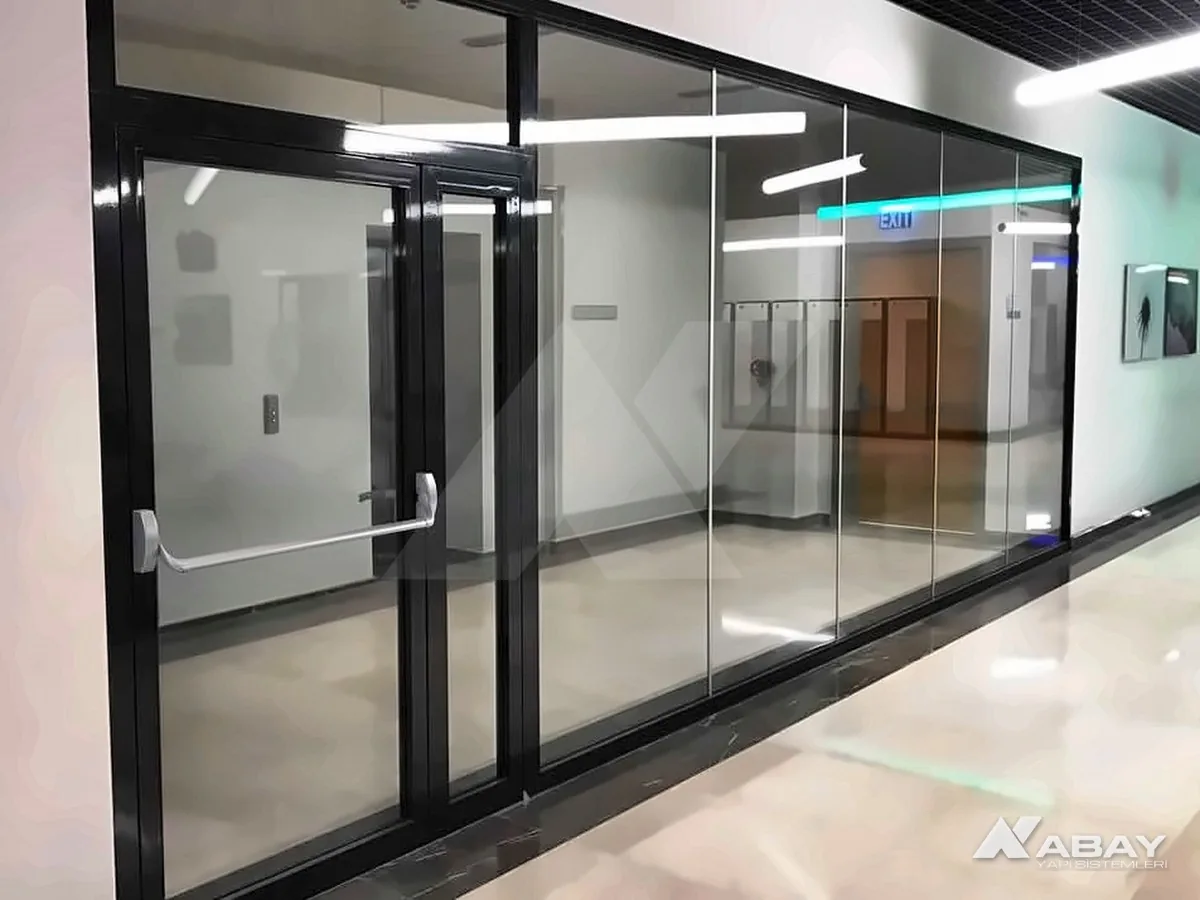
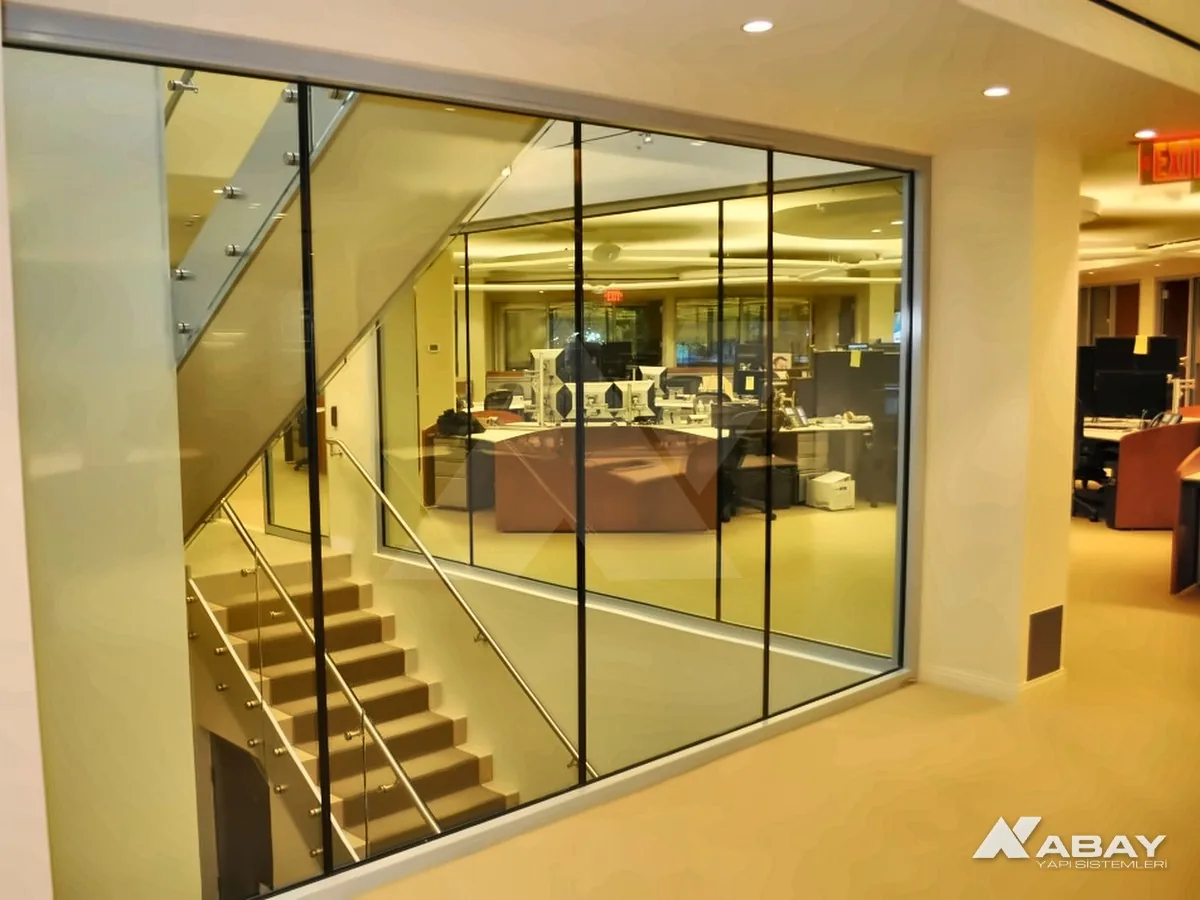
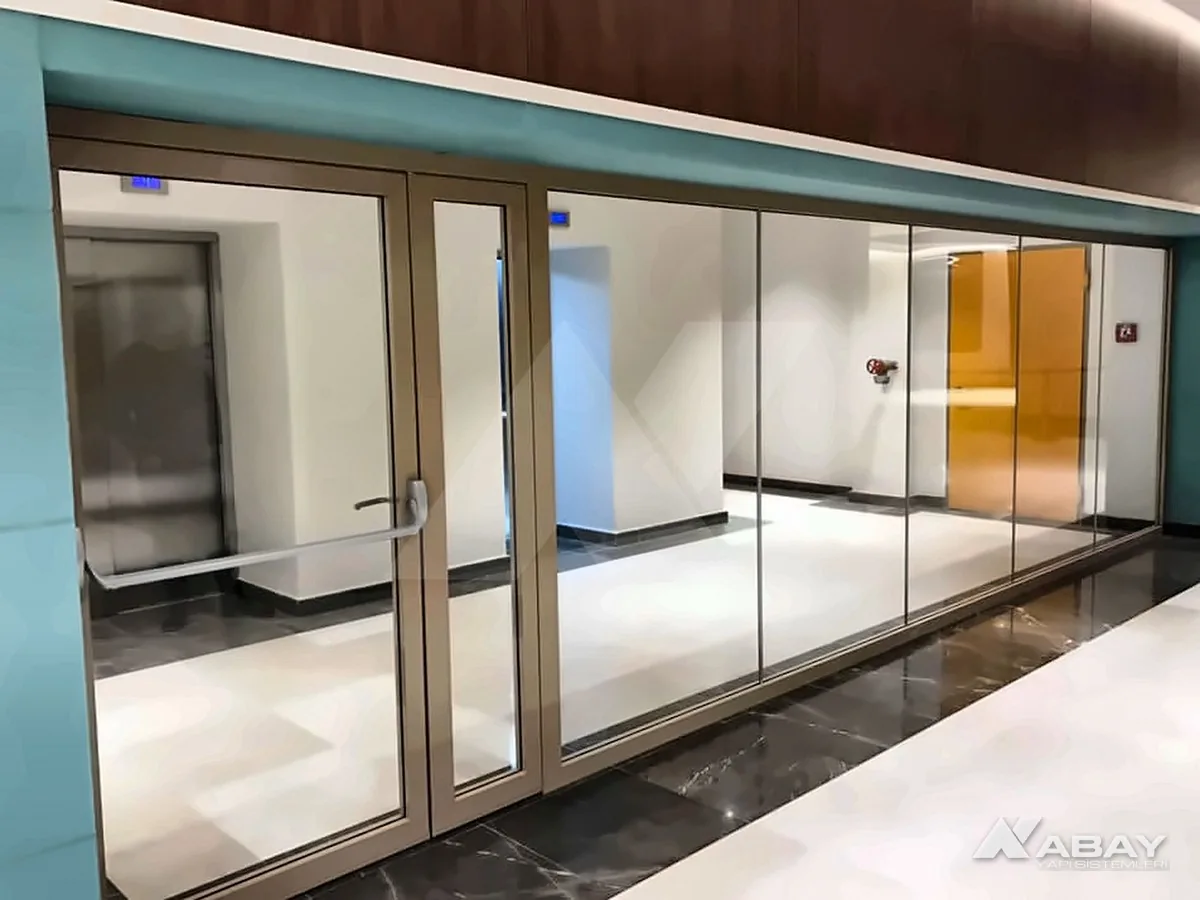
Doors and partitions with fire glass in our reference projects.
The top row shows partitions and doors where glass takes up most of the surface, the bottom row our other projects. Open a photo and browse with the arrows.
04 Glass and profile
Which profile system is the glass used with?
The class of the fire glass is matched to the certificate scope of the framing system it is fitted in. The glass is chosen according to the class of the system.
FR65
Interior door and partition
Door and partition EI30 or EI60. Glass range 17–25 mm. Framed partition
FR90
Interior and exterior
Door EI30, EI60, EI90; partition EI30 to EI120. Glass range 20–69 mm. Glazed fire doors
BR
Frameless, glass to glass
Panes meet without mullions in between; EI30 to EI120, glass 30–50 mm. Frameless partition
05 Where it is used
Where is fire glass used?
Places where the Turkish Fire Regulation (BYKHY) requires a fire-resistant door, window or vision panel. In each scene the fire is behind the glass.
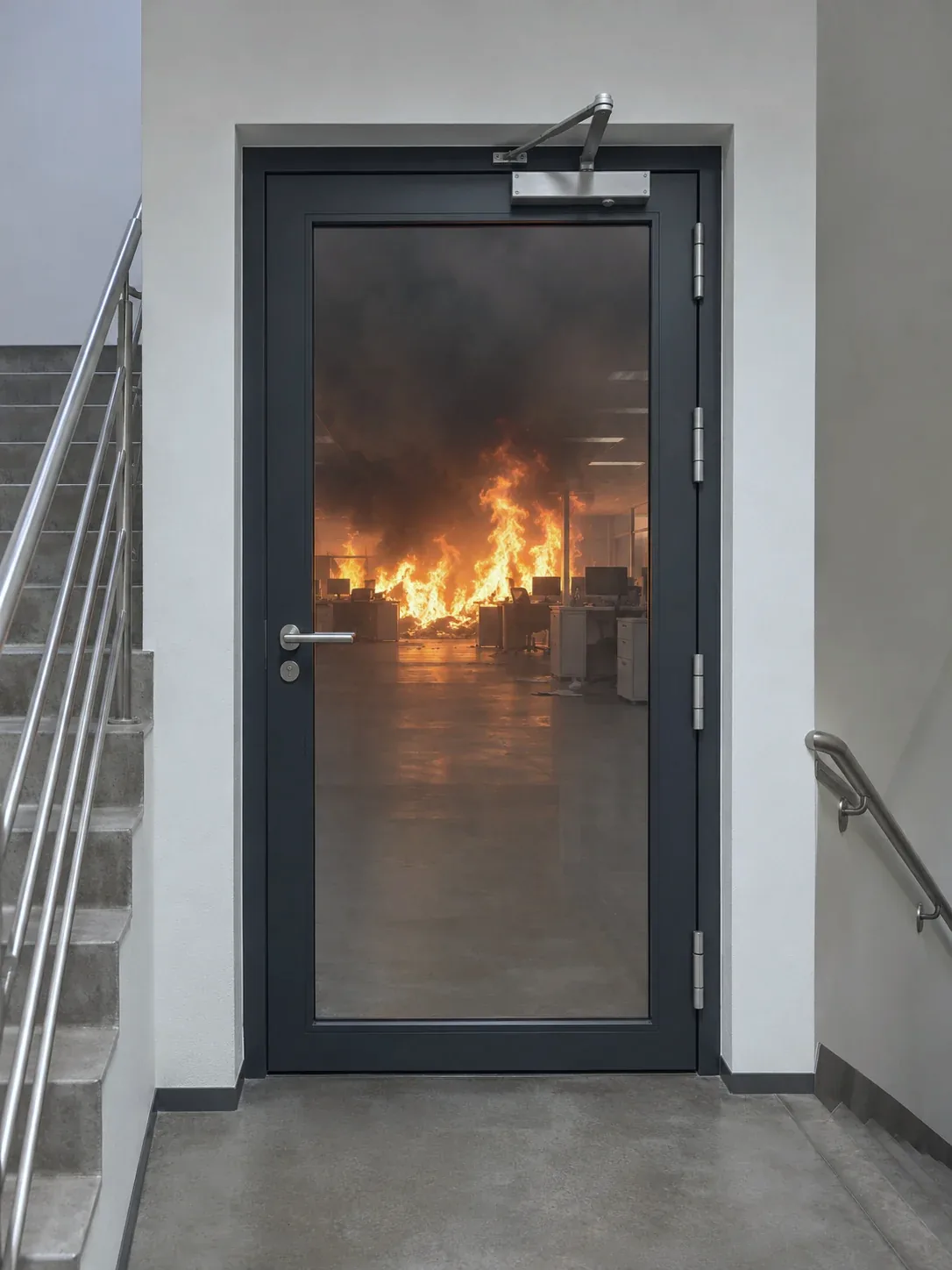
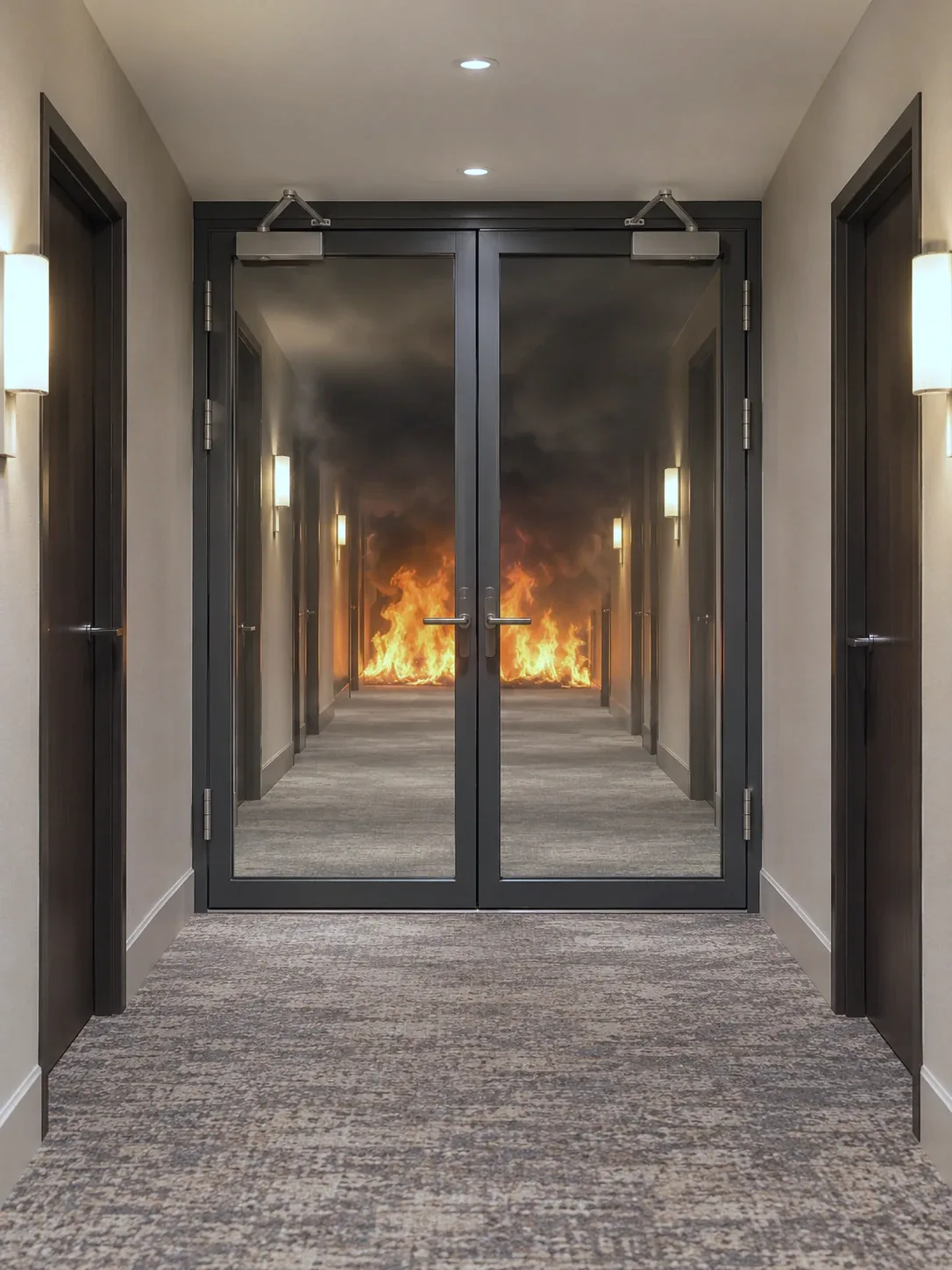
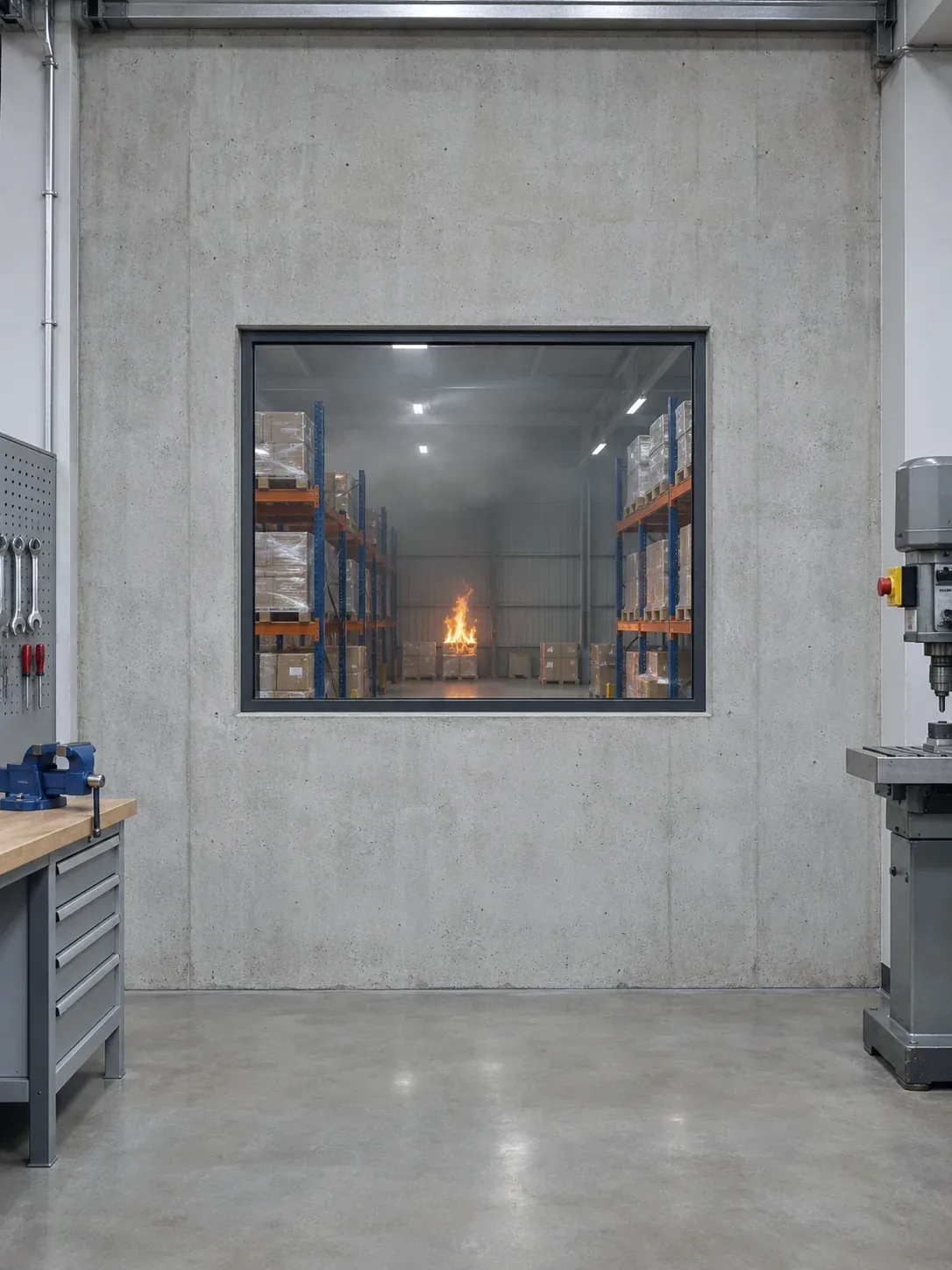
 Fire side
Safe side
- Escape stair door An escape stair is separated from other parts of the building by a wall resisting at least 120 minutes and a smoke-tight door resisting at least 90 minutes. Through the fire glass in the door, the floor can be seen while waiting on the stair; in the scene the floor is burning and the stair is clear. BYKHY 38(3)90 Fire escape stair door page
- Smoke barrier in a hotel corridor Escape doors in a smoke barrier dividing a hotel's interior corridor resist at least 60 minutes and are smoke-tight. Except for glazed doors, these doors are fitted with glass giving a clear view of at least 25% of each leaf. BYKHY 50(6)(a), 50(6)(c)60 Hotel page
- Fixed window in a fire wall If a fixed light window in a fire wall cannot be avoided, the window must resist for at least half the fire resistance of the wall. In the scene a warehouse in the adjoining building is burning and the workshop is clear. BYKHY 25(2)Half of the wall Fire wall door page
- Beside an external escape stair Within 3 metres to the sides of and below an open external escape stair, no door or window may have lower protection than the stair itself. In the scene the room behind the window next to the stair is burning and the stair is clear. BYKHY 42(2)Within 3 m
06 Document set
Which documents should you ask for with fire glass?
The glass's own declaration describes the glass; how many minutes the door or partition resists is shown by the report in which the glass and profile were tested together.
Four checks on delivery
- Declaration of performance. The declaration of performance (DoP) of the glass is required; a product without a declaration cannot carry the CE mark.
- Door or partition report. The duration is shown by the report in which the glass was tested with the profile.
- Glass as tested. The project uses glass of the brand and class tested in the report.
- Stamp and label. The etched stamp and label in the corner of the glass are compared with the glass in the documents.
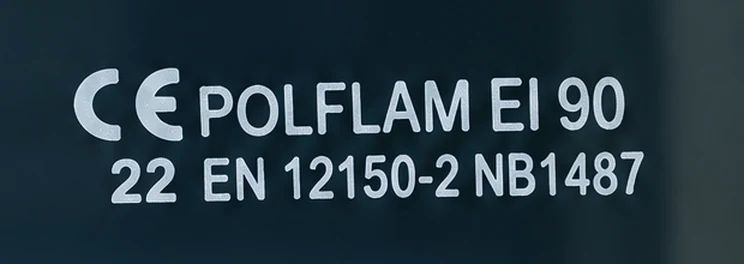
- DeclarationPolflam EI declarations of performanceEI30–EI120 · CE markedRequest it
- DataTechnical values of the glassThickness, weight, light, soundRequest it
- ReportDoor and partition test resultsProfile and glass togetherRequest it
- AuthorisationAliplast manufacturing authorisationAuthorised manufacturer and distributor in TurkeyRequest it
Source: Turkish Construction Products Regulation 6(1), 10(2)
Request the document set for the glass. Declarations and reports are shared together with the door or partition in which the glass will be used.
Request the document set07 FAQ
About fire-resistant glass
If your question is not here, ask our technical team.
How thick is fire glass?
The Polflam glass we use in doors and partitions is 20 mm thick for EI30, 25 mm for EI60, 32 mm for EI90 and 35 or 40 mm for EI120. The BR glass used in frameless partitions is a separate product, between 30 and 50 mm.
How much light does fire glass transmit, and is it tinted?
The interlayer is clear. The light transmission of the five glass types on this page is between 85% and 87%; from outside it looks like ordinary clear glass.
Does fire glass on its own make a door fire-resistant?
The class of the glass is matched to the certificate of the door or partition it is fitted in. How many minutes the door resists is shown by the report in which the glass and profile were tested together; this is why the project uses glass of the brand and class used in the test.
What is the difference between E, EW and EI?
E is integrity only: flames and hot gas do not pass. EW additionally limits heat radiation but is not a thermal insulation class. EI, in addition to integrity, limits the temperature rise on the side not facing the fire. The number beside the letters is minutes.
How heavy is fire glass?
Weight per square metre increases with thickness: 20 mm EI30 glass 37 kg, 25 mm EI60 glass 43 kg, 32 mm EI90 glass 51 kg, EI120 glass 55 kg at 35 mm and 61 kg at 40 mm.
Can fire glass be used outdoors?
Polflam glass is made for interior and exterior use. The profile carrying the glass is chosen accordingly: Aliplast FR90 is used inside and outside, FR65 for interiors.
→ Quote
Tell us where the glass will be used.
Our technical team will determine the glass class, thickness and document set and get back to you.
- Phone
- +90 216 428 38 20
- abay@abayyapi.com
- Production
- Istanbul